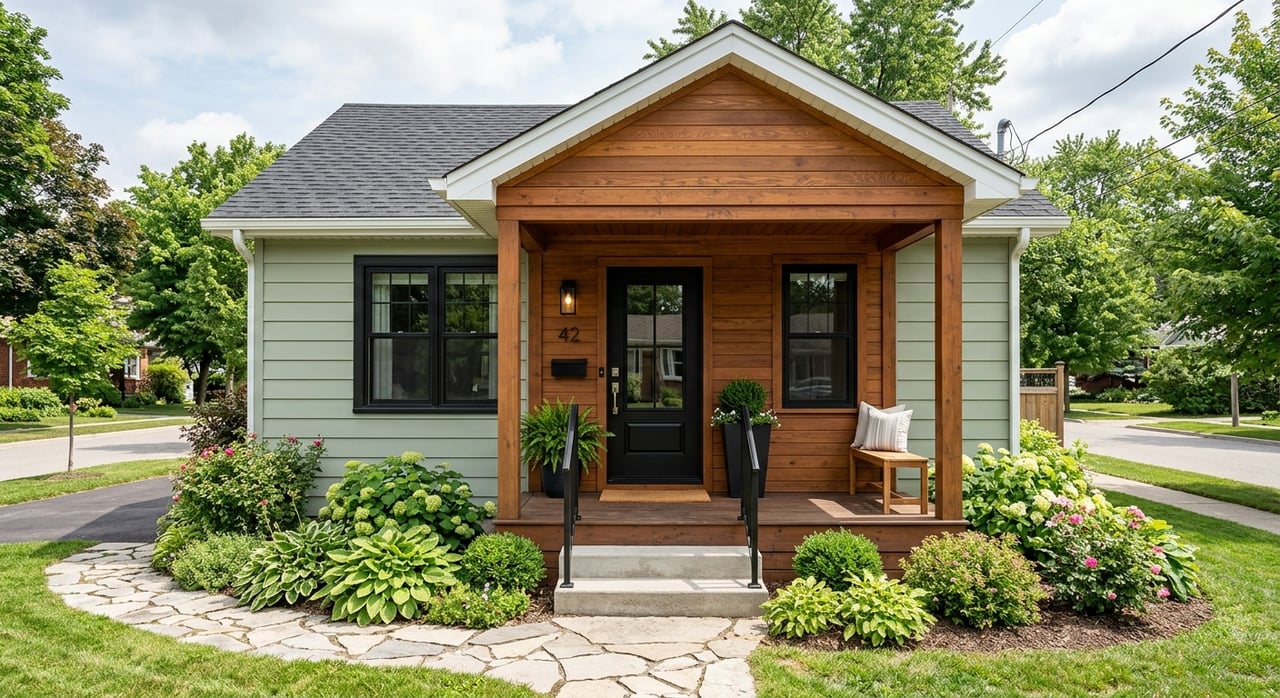
Red Bank Starter Homes Tips for First-Time Buyers
May 21, 2026
May 21, 2026
Buying your first home can feel like trying to hit a moving target, especially when you want a price that feels manageable without giving up too much space or location. If Red Bank is on your list, there is good news: it remains one of the more accessible entry points in the Chattanooga area, but it also comes with some important tradeoffs you should understand before you make an offer. This guide will help you get clear on what starter homes in Red Bank really look like, what your budget may buy, and where to watch for repair costs so you can shop with confidence. Let’s dive in.
Red Bank stands out because it sits below Hamilton County’s March 2026 median sale price. The March median sale price in Red Bank was $290,000, compared with $376,450 for Hamilton County overall. That gap is a big reason many first-time buyers start their search here.
At the same time, Red Bank is not a bargain-basement market. The year-to-date median sale price was $335,000, sellers received 95.3% of original list price in March and 97.5% year-to-date, and the market had 2.4 months of inventory with 49 days on market. In plain terms, that means you may have some room to negotiate, but you still need to be realistic and prepared.
For many buyers, the sweet spot in Red Bank is usually the high-$200,000s to mid-$300,000s. Where a home lands in that range often comes down to condition, square footage, and how much updating it needs.
If you picture a brand-new subdivision, Red Bank may surprise you. According to the city’s comprehensive plan, about 80% of the housing stock was built before 1980, with most homes built between the 1950s and 1970s. That older inventory shapes what first-time buyers are most likely to see.
In many cases, your search will include older ranches, bungalows, and smaller detached homes. Roughly two-thirds of the housing stock is single-family, which fits well with buyers who want a traditional detached home as their first purchase.
You may also come across attached or smaller multi-unit options. The city reports that about 13% of the housing stock is duplexes, triplexes, or quadplexes, and about 20% is in buildings with 5 to 19 units. Those homes are part of the mix, but they are not the main story in Red Bank.
Around the $300,000 mark, you should expect choices, but also compromises. In Red Bank, that price point may buy you an older home with decent bones, a smaller footprint, or a property that needs cosmetic work or system updates.
That is why it helps to think beyond list price alone. A lower purchase price can be attractive up front, but if the roof, HVAC, plumbing, or electrical systems are nearing the end of their life, your real cost of ownership may be higher than it first appears.
For many first-time buyers, the biggest question is this: Do you want more space and more projects, or less work and potentially less house? In Red Bank, that tradeoff is often front and center.
Older homes can absolutely be a smart first purchase. They may offer more accessible pricing than some nearby areas, and they often give you a chance to build equity through thoughtful updates over time.
Still, older housing asks more from you as an owner. Red Bank’s comprehensive plan estimates that homes built before 1980 average 0.6% to 0.8% of home value per year for maintenance, compared with 0.2% to 0.4% for homes built in the 1990s through the 2010s.
On a $300,000 home, that older-home estimate works out to about $1,800 to $2,400 per year. That does not mean you will spend that exact amount every year, but it is a useful planning range when you are setting your monthly comfort zone.
One of the smartest things you can do as a first-time buyer is treat future maintenance as part of your budget from day one. A broad planning rule is to set aside 1% to 4% of a home’s value per year for maintenance, repairs, and replacements. In Red Bank, where much of the housing stock is older, that mindset is especially helpful.
When you tour homes, keep an eye on the systems and features that tend to drive bigger costs. These are often the areas where an affordable home can become more expensive after closing.
These categories line up with the way older homes are commonly evaluated in residential rehabilitation and inspection guidance. If one or more of these areas needs work soon, you may want to treat those costs as part of the purchase decision, not just a future project.
Because so many homes in Red Bank were built decades ago, an independent home inspection is one of the most important steps in your process. It can help you understand not just what looks dated, but what may affect safety, function, or your near-term budget.
An inspection can also give you a clearer picture of what needs immediate attention versus what can wait. That matters when you are deciding how much to offer, whether to ask for repairs or concessions, and how much cash you should keep in reserve after closing.
If you are looking at a home built before 1978, there is another issue to keep on your radar. The EPA says homes built before 1978 may contain lead-based paint, and it recommends treating paint in those homes as if it contains lead unless testing shows otherwise.
In Red Bank, first-time buyers often have to choose between more square footage and better condition. A larger home at a lower price may seem like the better deal, but if it comes with an aging roof, outdated wiring, or drainage issues, your total cost can climb quickly.
On the other hand, a smaller home that has already had major updates may offer more predictable monthly ownership costs. That can be a better fit if you want lower surprise expenses in your first few years of homeownership.
There is no one-size-fits-all answer here. The right choice depends on your cash reserves, your comfort with repairs, and whether you want a move-in-ready home or a place you can improve gradually.
If you are deciding between several Chattanooga-area starter markets, Red Bank compares well on price. Its March 2026 median sale price of $290,000 was close to East Ridge at $295,000 and Brainerd at $304,000, while Hixson at $377,775 and East Brainerd at $380,000 came in notably higher.
That makes Red Bank one of the more accessible options for buyers who want to stay near Chattanooga without stretching into a significantly higher price bracket. It also means your budget may go a bit further here than in Hixson or East Brainerd, even if the home itself needs more updating.
Inventory also matters. Red Bank had 2.4 months of inventory in March 2026, compared with 3.8 months in Brainerd and 4.3 months in East Brainerd. So while Red Bank may be more accessible on price, supply was also somewhat tighter.
| Area | March 2026 median sale price | First-time buyer takeaway |
|---|---|---|
| Red Bank | $290,000 | Accessible price point with older housing and maintenance planning needs |
| East Ridge | $295,000 | Similar entry point with a different housing mix |
| Brainerd | $304,000 | Still budget-friendly, often attractive for buyers prioritizing price |
| Hixson | $377,775 | Higher price floor for many first-time buyers |
| East Brainerd | $380,000 | Often requires a larger budget or smaller wish list |
If Red Bank is your target area, the best strategy is to shop with both your mortgage payment and your repair budget in mind. A home that looks affordable on paper may feel very different if you need to replace major systems in the first year or two.
Before you start touring homes, it helps to set a clear plan for:
This approach can help you avoid stretching for a home that leaves no room for real-life ownership costs. It can also help you recognize when a lower-priced home is truly a good value and when it is simply priced to reflect needed work.
One of the biggest mindset shifts for first-time buyers is realizing that a starter home does not need to check every box. In Red Bank, a solid first purchase may be an older home with a practical layout, a manageable price, and a realistic path for updates over time.
The goal is not perfection on day one. The goal is finding a home that fits your life, supports your budget, and gives you a comfortable next step into ownership.
If you want a local guide who can help you weigh price, condition, and long-term costs in Red Bank, Deonne Taylor is here to help you make a smart first move.
Stay up to date on the latest real estate trends.

Get assistance in determining current property value, crafting a competitive offer, writing and negotiating a contract, and much more. Contact Deonne today to discuss all your real estate needs!